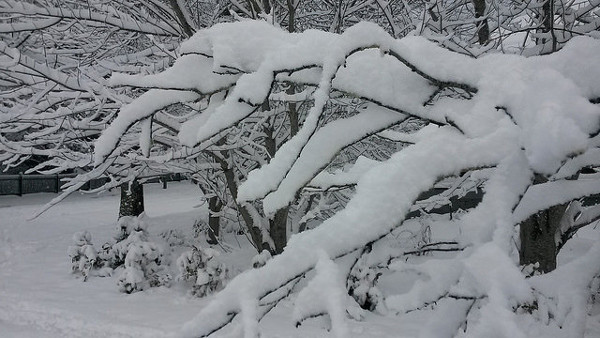
Winter 2008
July 21st, 2008:
This Monday event showed a bit of promise but in the end Blackheath only had brief sleet and hail for five minutes just before midday. Katoomba and Lithgow also had similar sleet and hail showers and no doubt the Oberon Plateau would have had some light snow. It was very cold and windy with wind chill temps reaching about -6C but that was about it. The two days following have seen great frosts though with -2.9C and -3.1C respectively.
July 9th to 11th, 2008:
Well, winter took a while to get going as far as cold fronts are concerned but it finally gave us something to crow about. Whilst the upper temps (roughly 5000 metres above sea level) of the first cold front on Tuesday were quite cold, surface pressure patterning was quite high (stable air, not much air rising up to form solid snow bearing clouds) so this usually means snow mostly for the western areas of the tablelands in places like the Oberon Plateau, Sunny Corner and Orange etc. As the front moved north, the Oberon Plateau is the the first high point that the cold airmass encounters so as its lifted over the ranges there any snow that is available usually gets squeezed out of the clouds before it reaches the Blue Mountains. The Blue Mountains tends to get the dregs in this context, that is, cloud breaking off from the main bank of clouds over the Oberon Plateau. For better snow here in the BM we need low surface pressure AND cold upper temps or preferably cold winds from the south as the Oberon Plateau doesn't block us from that direction.
It started snowing here in Blackheath on Wednesday morning but only from cloud breaking off from the Oberon Plateau, so it was light snow only and soon turned to sleet by 9am. Surface pressure was quite high so not many clouds were forming to enhance snowfall but there was sufficient moisture in the mid levels (just) to allow a little bit of snow and sleet to fall throughout the day. From around 4pm to 5pm steady sleet showers fell and then from around 6pm onwards we had another band of solid sleet showers falling with very slight accumulations but no real snow. The Oberon Plateau had snow overnight Tuesday and into Wednesday with a few cms in Oberon township and Orange also had a nice settling of a few cm. This snow melted fairly quickly as I headed to Oberon and Shooters Hill by midday when most of the snow was gone. We did experience some lovely snow showers at this time. The Northern Tablelands also had some lovely snow showers during this event with Guyra getting a number of cms settling in the town for the second time this year. A great result for them.
By Thursday morning the next front was moving in with strong gusts over 80kph and persistently over 50kph. The upper temps were not as cold in this event but surface pressure was a little lower and lower to mid level moisture was slightly better than the previous front. The apparent temperature or windchill temperature got down to around -11C during Thursday. There wasn't any sleet or snow to speak of in Blackheath until the evening when light sleet then snow started falling at around 10pm. Some snow showers occured for a few minutes at 10:45pm. It also snowed lightly and settled briefly from roughly 12:30am to 1:30am on Friday morning. By daybreak on Friday there were light sleet and snow showers falling from around 7:30am unil 9am when they eventually turned to light spitty rain. As the day went on, the cloud broke up as pressure rose more at the surface and the rising sun came in from the east. The Oberon area again had a few cms of snow in the higher areas above 1100 to 1200 metres and Sunny Corner also had about 2cm of snow on the ground by Friday morning.
So to summarise, it wasn't a super event with low pressure at the surface and strong cold air cells passing over regularly bringing great snow but it was a fun event in the context of a slow start to winter. The Oberon Plateau and places like Sunny Corner will usually do better out of events like this, when surface pressure is quite high. Hopefully there are not too many typos in this report. I usually produce such reports in the middle of very busy times.
May 17th and 18th, 2008:
NB: See photos of this event in the menu link at top of page. This event was shaping up to be more productive for the Northern Tablelands of NSW rather than the Central Tablelands and this came true in the end as no snow fell in the Blue Mountains. We had some hail (which is very different to sleet) and cold showers and strong winds but that was all. Certainly great news though for those north of us as they had some ripper snow there. A week out from this event most forecasting models were showing a cut-off cold pool scenario and as I have mentioned over the years, this type of cold outbreak is hard to predict as the cold pool can move about in the upper levels, be quite small and make life generally difficult for forecasters. Eventually the models came to a general agreement on the look of this system although some predicted a stronger low forming off the coast than actually occured. The lack of particularly warm sea surface temps off the east coast may have been a factor in this regard as well as the cold pool not moving that close to the coast but staying inland a little.
The upper cold pool generally moved across NSW on Saturday and brought decent snow to the ski fields in its wake. As it continued north towards our area it fragmented a little and the coldest portion of the cold pool pretty much moved towards the northern tablelands and missed the Blue Mountains and even the Oberon plateau, although some snow fell there but didn't settle a lot. You can see on the satellite image above that there is a cold pool (blob of cloud) below the Guyra one. This is the cold pool that stayed mostly west of the Central Tablelands and the Blue Mountains.
Andrew Miskelly, the Weatherzone Webmaster and also a pilot produced this explanation below over at Weatherzone forums and it helped me understand why the Guyra area received so much snow even though the lower levels were not that conducive to it falling. NB: And don't forget Andrews personal site here.
"...heavy snow falls from the cloud and melts, absorbing energy from the surrounding atmosphere in the process. This allows subsequent precipitation to remain as snow to lower and lower levels.
It makes sense that for this to be effective to any great extent you need relatively heavy, persistent precipitation. While cold-air down-draughts from showers can be effective in momentarily bringing snow to lower levels it doesn't tend to result in significant settling.
It tends to be the case when this goes on that the lapse rate close to the surface is pretty flat. Last year I drove from Shooters Hill (1350m) to Taralga (850m) in constant, heavy snow and the temperature hovered around zero the whole time.
This process can be useful in bringing low level snow when fronts pass in the morning and the near-surface air is already a few degrees cooler than it might be during the afternoon.
It's also almost exclusively how places like the Southern Highlands (around Bowral) ever get any snow - the combination of a moderately cold atmosphere and a fat rain band."
April 28th, 2008:
Well, what a day this was. I will try to fill in this report as time allows over coming days, suffice to say, in some ways, it was one of the most impressive fronts ever to arrive in April. Sure, there have been snowier fronts in April on rare occasions but not many of them at all in recent decades. The most impressive aspect of this system was that the upper temperatures were so cold. -31.9C at 500hPa is an April record by more than 4 degrees! Its also the equal lowest temperature at that level (for any month) in the atmosphere since 1993. I'm quite sure this applies to NSW only but will confirm this as I get time. Temperatures lower down at the 850hPa level were the third coldest ever for April, which whilst not quite as impressive, is still very good indeed.
Blackheath had four seperate periods of snow shower activity throughout the day, the first one at around 1:30pm and the last at around 5:30pm. One of these snow showers at about 3pm lasted for more than twenty minutes and was quite intense at times. No real settling occured here as the temp was around 1C for most of the time during the snowfalls. Places like Sunny Corner had settled snow to about 3cm and the Oberon Plateau had notably more than that. Portland also had snow showers, quite heavy at times. That's all I have for now but this event would be considered good for winter, not to mention April. Not huge amounts of moisture but the system as a whole was very cold and impressive for this time of year. Katoomba looks to set an all-time April record for lowest day time maximum as well - to be confirmed. NB: Katoomba came in at 7.8C for their maximum yesterday (the April record from 1982 is 7.2C) but I can't work out how they were 2.8C warmer than Blackheath yesterday, even allowing for less cloud or snow. BTW, our maximum at Mount Boyce AWS yesterday was a new April record at 5C.
Some more of the sites in the central tablelands that recorded their coldest ever maximum temps for April are Bathurst AP (8.6C), Mudgee AP (12.5C), Oberon (4.5C), Orange (6.4C), and Wellington (13C). The temperature records for Wellington go back 88 years so setting such a record is very significant. Taralga, in the southern tablelands, and just to the south of Oberon also set a coldest ever maximum record (7C) and their temp records go back 47 years.