Updated 2-10-16.
NB: This document is a work in progress, as I learn more about this topic, both from observation/experience and talking to other experienced weather minds. Thanks to those that have helped me come to a clearer understanding.
Sleet can be a confusing term, at times. Probably the best Australian and English definition of sleet is snow in the process of melting. As an observation, this can present as snow flakes with some rain present, or even cold rain with some slushy, soft ice present. The UK Met Office says, 'Sleet has no internationally agreed definition but is reported in meteorological observations as a combination or mix of rain and snow. Essentially, it is frozen precipitation that partially melts as it falls and has begun the melting process before it reaches the ground.'
That is, if the temperature is not quite at zero degrees celsius (typically between 2C and 3C) and the air is saturated with precipitation, you will usually see snow melting. Generally speaking, as the temperature continues to drop below 2C, more snow than rain will appear until only snow will occur at around 1C to 0.5C and below.
Here's the UK met video:
UK Met - Video - Explaining sleet.
In the USA, sleet is a different phenomenon, being small, clear ice pellets. They are sometimes mistaken for hail but form in a different way and are usually (but not always) smaller - around 5mm or less. This occurs when snow flakes falling through a small layer of warmer air (typically in the mid-atmosphere from 5000 to 10000 feet) begin to melt. They can then re-freeze if they pass back into a layer of colder, sub-freezing air closer to the ground, resulting in little balls of clear ice. In Australia this phenomenon is not called sleet but is usually described by the common name of ice pellets and is sometimes mistaken for hail.
NB: It is possible for snow to occur at temperatures as high as 5C but the upper temperatures (at 500hPa) and mid level temps (at 700hPa) need to be cold and the relative humidity needs to be well under 100% at ground level. Such snowfalls are brief and rarely settle.
In the Blue Mountains (and across the Southern/Central and Northern Ranges of NSW) we can also experience graupel which goes by the common names of 'snow pellets', 'sago snow' or even 'soft hail'. Such icy precipitation is usually less than 10mm in diameter. This phenomenon forms when super cooled droplets in convective clouds (as low as -40C) form over melting snowflakes and produce an outer coating 3m to 5mm thick. The appearance of graupel can vary from a soft, stubby white cone like appearance to something more rounder, brittle and translucent, depending on how cold the air is when it develops in convective clouds.
Snow grains are also observed in the mountains and they are white, opaque grains of ice that are usually very small, typically less than 3mm and are fairly flat or elongated. They tend to fall in weak stratus or fog and the accumulations are very light. They can be confused with sleet and even drizzle and sometimes the only way to confirm an observation of snow grains is to let them fall on a very dark jumper etc. Typically it needs to be 0C or below, for them to form.
Hail can be confused with ice pellets and snow pellets (sago snow etc) but typically forms in warmer weather, in spring and summer convective cells and thunderstorms. However, it can occur in cold weather, too. It consists of balls of ice or irregular lumps of ice, that usually have observable layers of ice, each of which is called a hailstone.
Unlike graupel/sago snow and ice pellets, which are made of rime, which are smaller and translucent, hailstones consist mostly of water ice and measure between 5 millimetres (0.2 in) and 15 centimetres (6 in) in diameter.
So, just to refresh on the various forms of frozen, winter precipitation in Australia, we have: snow, sleet, graupel (sago snow, snow pellets, wintry/soft hail), ice pellets (american sleet) and snow grains. Remember, sleet is easier to identify if you follow this; it will be observed as melting snowflakes falling with some rain and even rain occuring with a bit of ice associated with it. IMO, the best method of identification, is to watch it falling on a car windscreen as you drive through it, in which case the sleet splatters leaving ice crystals clearly visible.
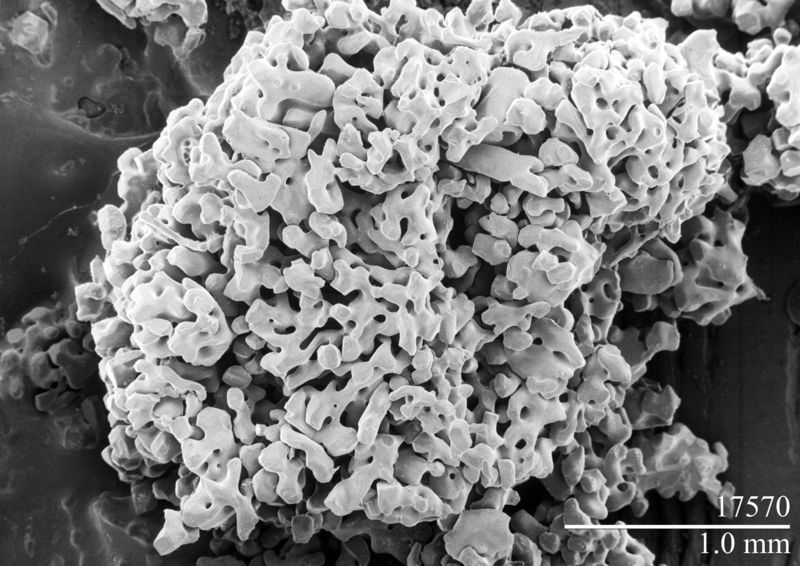
Amazing Snowflake Image - 1 - magnified, with frozen rime (fibrous material) at each end.
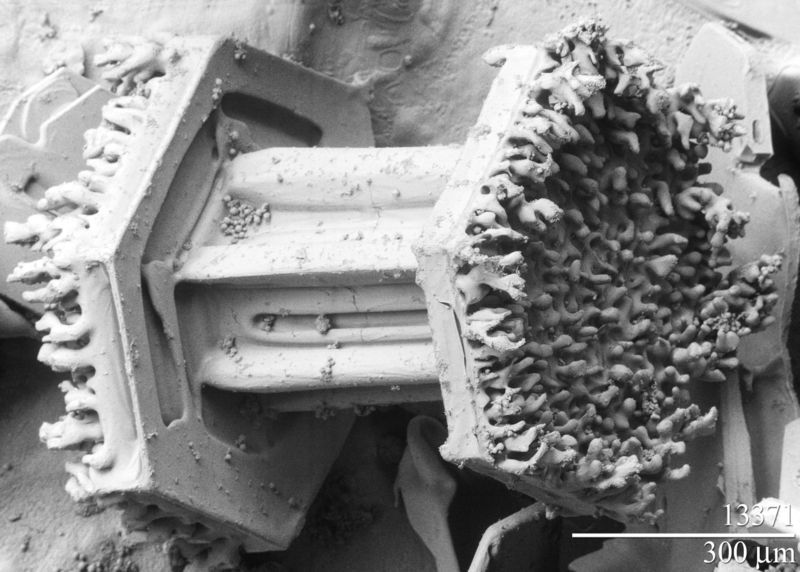
Amazing Snowflake Image - 2 - magnified, with frozen rime (fibrous material) fully covering snowflake.